Whole Foods
Assembling the Daily Plate: Whole Grains, Lean Protein, and the Slow Logic of Sustained Energy
Tobias Whitfield · 12 March 2026
Trace minerals occupy a curious position in the ordinary conversation about men's nutrition. They are not absent from awareness — most men who follow nutritional topics have encountered the names zinc and selenium — but they tend to be discussed in a register that has more to do with supplementation catalogues than with practical food choices. The Dispatch's interest is different: where do these minerals actually appear in the ingredients of a realistic weekly menu, how much does an average serving contribute, and what does consistent dietary inclusion look like in practice rather than theory?
Zinc supports normal cognitive function and immune health, and its presence in the daily diet is more critical for men than is often recognised in general nutritional guidance. The Reference Nutrient Intake for zinc in adult men, as set by UK dietary standards, is 9.5 mg per day. This figure is achievable through food without engineering the diet around it — but it does require that zinc-rich foods appear in the menu with regularity rather than sporadically.
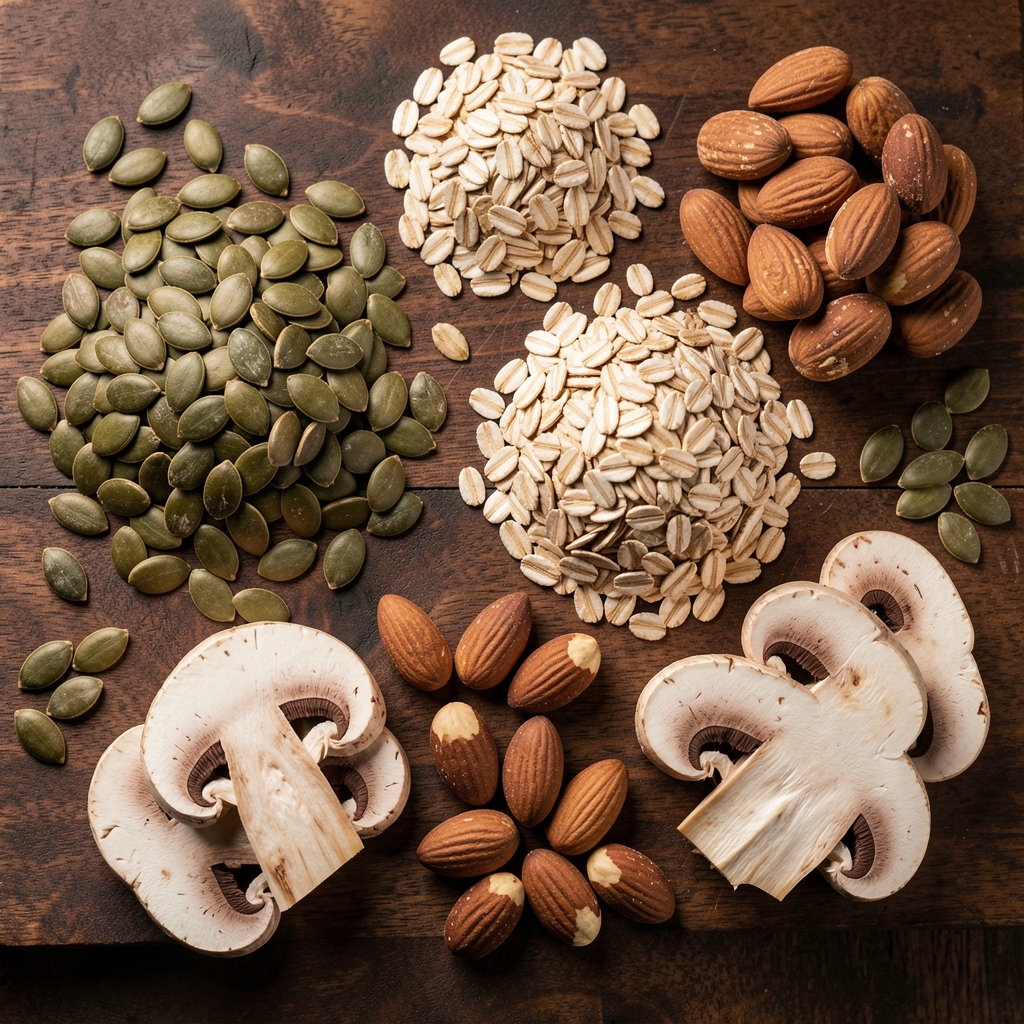
The highest-concentration food sources of zinc are shellfish, particularly oysters, which contain more zinc per gram than any other commonly consumed food. However, the weekly menu does not require oysters to meet the reference intake. Beef and lamb, in modest portions, contribute meaningfully: a 100-gram serving of cooked lean beef provides approximately 6 mg of zinc. Pumpkin seeds are a practical plant-based source — a 30-gram serving provides roughly 2–3 mg — and their versatility (added to porridge, sprinkled on salads, incorporated into trail mixes) makes them a low-friction inclusion for both desk-based and active routines.
Other notable zinc sources that appear naturally in a balanced weekly menu: hard cheese (particularly Cheddar and Gouda), chickpeas, lentils, cashew nuts, and whole grain bread. The pattern that emerges is one of distributed contribution across multiple meals rather than any single high-dose source.
Selenium contributes to protection of cells from oxidative stress — a function that becomes increasingly relevant as part of the broader nutrition picture for men navigating the physical demands of an active lifestyle. The UK Reference Nutrient Intake for adult men is 75 micrograms per day, a figure that, for most men following a varied diet, is achievable through food sources alone.
Brazil nuts are the most cited source, and the characterisation is accurate: a single Brazil nut (approximately 5 grams) can contain between 70 and 90 micrograms of selenium depending on soil origin. This makes the two-nut-per-day approach a functional dietary strategy, though it warrants noting that selenium content varies considerably by source, and the upper tolerable intake level should not be regularly exceeded. For the purposes of the weekly menu, Brazil nuts serve as an efficient and low-effort source, requiring no preparation and no significant cost.
Beyond Brazil nuts, selenium-rich foods that appear in a standard UK diet include: eggs (one large egg contributes approximately 15–20 micrograms), oily fish such as sardines and tuna (100-gram serving contributes roughly 35–45 micrograms), and wholemeal bread and brown rice as more modest secondary contributors. Sunflower seeds are often noted alongside pumpkin seeds as a seed-category contributor to both selenium and zinc, making them a useful two-function inclusion in the weekly menu.
“The trace mineral picture in men's nutrition resolves more clearly when viewed not as a supplementation question but as a pattern of food sourcing — where do seeds, shellfish, and lean meat appear in the week, and with what consistency?”
An important contextual note: the bioavailability of zinc from plant sources is lower than from animal sources due to the presence of phytates — compounds in wholegrains and legumes that bind zinc and reduce its absorption. This does not invalidate plant-based zinc sources, but it does mean that men relying primarily on plant sources need higher total intakes than those with regular consumption of animal proteins. The interaction between dietary patterns and micronutrient bioavailability is a recurring theme in practical nutrition for men, and one the Dispatch will return to in subsequent issues.
For men whose weekly menus include a mix of plant and animal proteins — which represents the realistic pattern for most in the UK — the combined contribution of seeds, legumes, whole grains, lean meat, and dairy across the week is likely adequate for zinc without specific engineering. The practical task is consistency rather than calculation.
The Dispatch's approach to trace minerals in the weekly menu is structural rather than supplementary. The following observations are drawn from practical documentation rather than optimised protocol:
Monday and Wednesday breakfasts anchored in porridge with pumpkin and sunflower seeds contribute meaningfully to both zinc and selenium across the week. A midweek tin of sardines on wholemeal toast addresses selenium, omega-3 fats, and protein simultaneously. A portion of lentil or chickpea-based lunch twice per week covers the plant-based zinc contribution. Two Brazil nuts included with the mid-morning or afternoon snack — alongside a handful of mixed nuts — meets a substantial portion of the daily selenium reference intake without specific planning effort.
What is notable about this pattern is that none of its components require specialist ingredients, additional cost, or significant preparation time. The trace mineral adequacy of the weekly menu is a function of food sourcing decisions — choosing seeded bread over white, including a tin of oily fish in the midweek lunch, keeping pumpkin seeds in the kitchen — rather than of supplementation or specialist dietary planning.
Zinc and selenium do not function in isolation. Their dietary context includes a range of other micronutrients that appear in the same food sources. Magnesium, which contributes to normal energy metabolism and reduces tiredness, is present in pumpkin seeds, cashews, and dark leafy greens. Vitamin B12, which contributes to normal energy production, is found in animal proteins and dairy. Iron, which contributes to normal oxygen transport, appears in lean red meat, legumes, and fortified cereals.
The consistent observation across documented dietary patterns for men over thirty-five is that variety within a structured weekly menu delivers a broader micronutrient profile than any targeted supplementation approach targeting individual minerals in isolation. The food matrix — the combination of nutrients present together in whole foods — contributes to how those nutrients are absorbed and used, in ways that are not fully replicable by isolated supplementation. This is not an argument against supplementation where genuinely indicated, but an argument for the practical value of a varied, whole-food-based weekly menu as the primary nutritional strategy.
The relationship between trace mineral adequacy and metabolic function is an area of ongoing nutritional research. Zinc plays a role in normal carbohydrate metabolism, and its consistent dietary presence is therefore relevant to the diet for metabolism support that many men over thirty-five are looking to establish. The practical translation of this relationship is not a dramatic intervention but a modest one: the inclusion of zinc-rich foods within the structure of a balanced weekly menu, maintained consistently across months rather than weeks, produces a nutritional environment that supports normal metabolic function.

Eleanor Marsden contributes to Doreltan Dispatch on topics relating to micronutrition, trace mineral sourcing, and the evidence base for everyday dietary decisions. Her writing draws on published dietary guidelines and peer-reviewed nutritional research from UK and European bodies.
More from the Dispatch →